What are oil and grease deposits made of?
Deposits are formed from hydrocarbons of various origins: mineral oils, animal and vegetable fats, and synthetic lubricants. Over time, they build up in layers on walls, pipes and components and can no longer be removed with water alone.
Where do oil and grease deposits typically build up?
- in pipes, pipelines and sewers
- in tanks and other closed systems
- in buildings, for example on floors and surfaces in workplaces
- on lubricated components such as fifth-wheel couplings, wagon couplings or cableways
Which cleaner is best for what?
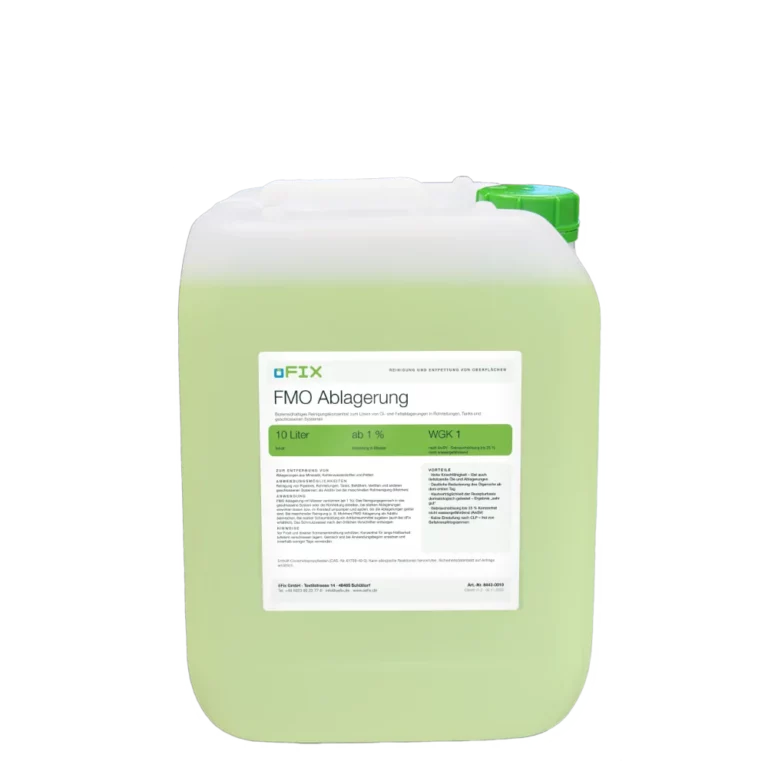
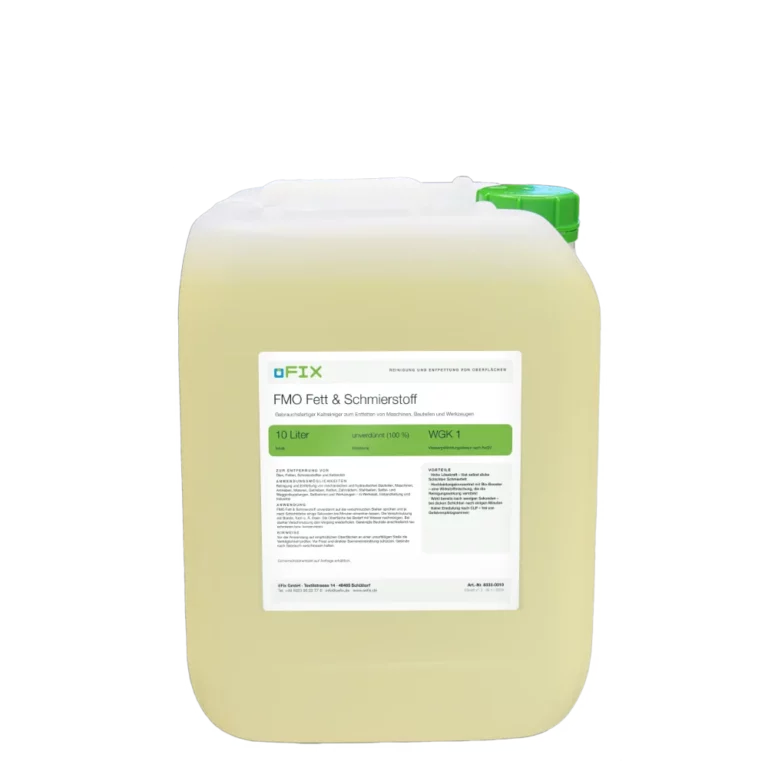
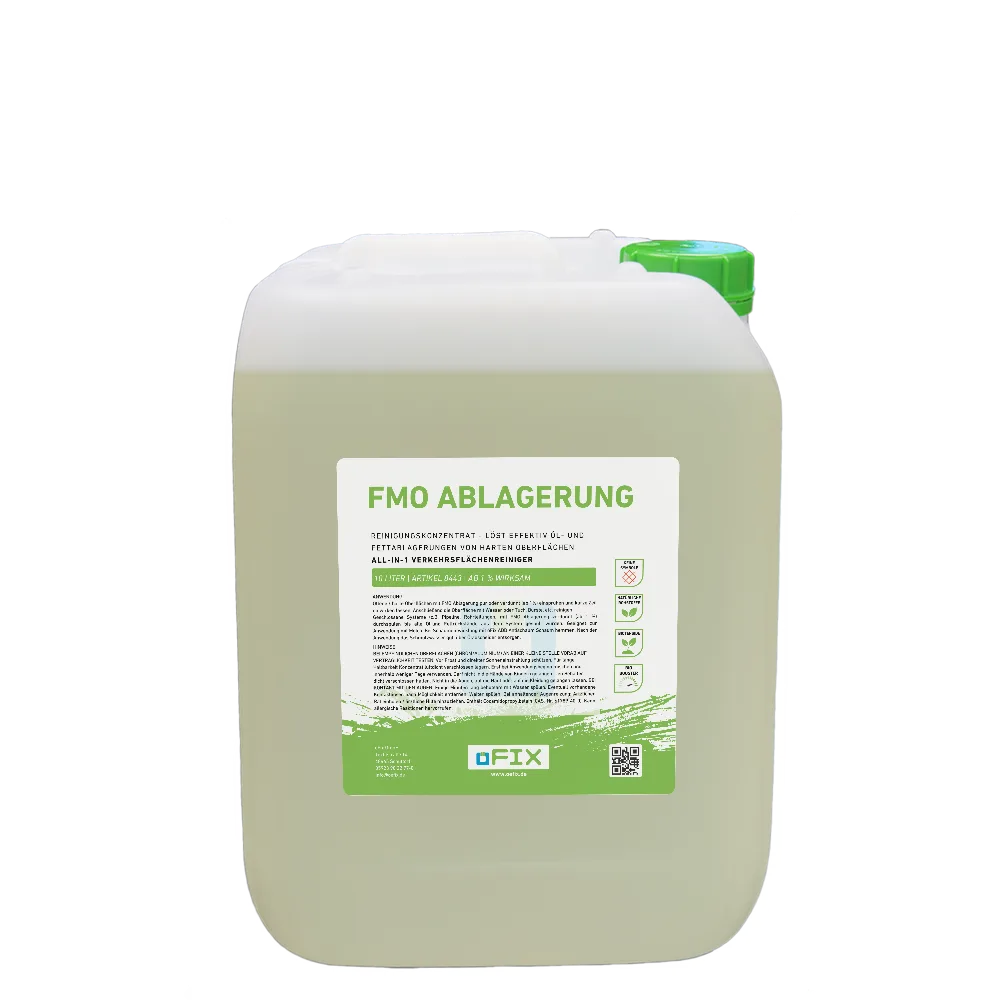
| FMO deposit | FMO Grease & Lubricants | |
|---|---|---|
| Deployment | Deposits in open and closed systems: pipework, tanks, sewers, buildings | Greases and lubricants on lubricated components |
| Application | diluted with water, 1 to 10 % | spray on undiluted |
| Exposure time | 1 to 15 minutes | a few seconds to a few minutes |
| Basic | 100 % native active ingredients | 100 % natural bio-solvent with bio-surfactants |
| Container | 10-litre jerrycan, 600-litre and 1,000-litre IBCs | 10-litre jerrycan, 600-litre and 1,000-litre IBCs |
Find out more about the products: FMO deposit and FMO Grease & Lubricants.
How are deposits removed from pipes and tanks?
- Dilution: Dilute FMO deposits with water to a concentration of 1 to 10 %, depending on the type and thickness of the deposits and the cleaning method used.
- Filling and flushing: Introduce the cleaning solution into the closed system or pipework and flush until the deposits have been completely removed.
- Machine washing: For mechanical processes, such as those using a pig, add FMO to the mixture as an additive.
- Limiting foam: If excessive foaming occurs, add öFix ADD anti-foam.
How do you remove grease and lubricants from components?
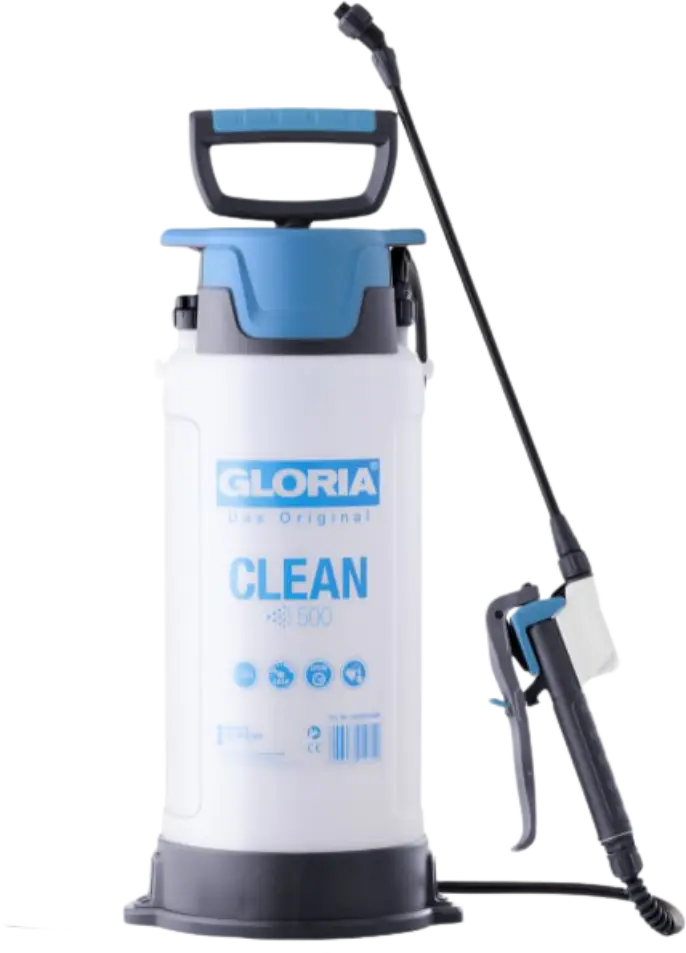
- How to use: Spray FMO Grease & Lubricant directly onto the soiled areas, for example using an acid- and alkali-resistant pressure sprayer such as the Gloria Clean 500.
- Leave to soak in: The bio-solvent takes effect within a few seconds; for thick layers, this may take up to a few minutes.
- Remove: Remove any dirt with a brush or cloth; you may then rinse the surface with water if required.
- Repeat: If the surface is extremely dirty, leave it to work for longer or repeat the process.
What happens to the dirty water after cleaning?
Any wastewater resulting from cleaning with FMO Ablagerung may, where appropriate, be disposed of via an oil separator after use – FMO Ablagerung is suitable for oil separators in accordance with ÖNORM B 5105. Please observe the locally applicable disposal regulations.
Do the cleaning products damage seals and materials?
No. FMO deposit is highly compatible with materials, does not corrode seals and is free from fragrances, colourants and hazardous substances. FMO grease & lubricant is based on Bio-surfactants and bio-solvents, which specifically dissolve hydrocarbons whilst being gentle on materials.