
What does „not hazardous to water“ mean under the AwSV?
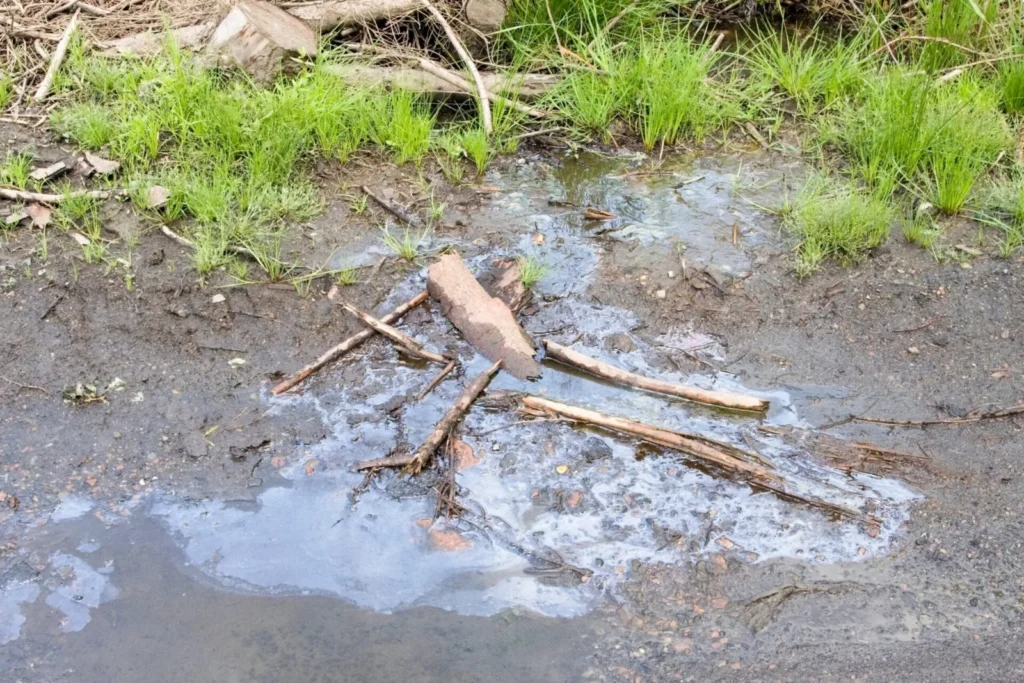
In Germany, the Ordinance on Installations for the Handling of Substances Hazardous to Water (AwSV) governs the protection of groundwater and surface waters. Each substance and mixture is classified according to a fixed assessment system into one of three water hazard classes (WGK 1 to 3) – or classified as „not hazardous to water“. FMO Road and FMO water bodies are classified as not hazardous to water. This is the best possible classification under German water legislation and means that the product poses no risk to water bodies – neither to groundwater nor to lakes, rivers or the sea. This offers significant advantages in practical use: whilst cleaning products with WGK 1, 2 or 3, when used on Traffic areas Whilst there is always a risk of the product entering water via road drains, ditches or the ground, this risk is eliminated with a product that does not pose a risk to water. FMO Strasse therefore provides fire brigades, building yards and road maintenance depots with the means to remove oil spills manually without harming the environment. FMO Gewässer is even suitable for use directly on water surfaces to remove oil films.
What are the requirements of the CLP Regulation – and why is FMO exempt from labelling?
The CLP Regulation (EC) No 1272/2008 is the key European regulatory framework for the classification and labelling of chemical substances and mixtures. It determines whether a product is classified as a hazardous substance and which hazard pictograms, signal words and precautionary statements must appear on the label. For FMO Road and FMO Water, no classification as a hazardous substance is required under the CLP Regulation: no GHS hazard pictograms, no signal word „Danger“ or „Warning“, and no H-statements on the label – the product is not subject to labelling requirements. The only information on the label is the statement, in accordance with the Detergents Regulation, that the product contains cocamidopropyl betaine (0.1–1 %), which may cause allergic skin reactions in people who are already sensitised. For the user, this non-labelling classification means: no need for hazardous substance storage, no special transport regulations, simplified handling and training – and an added level of safety for emergency services on site.
What does ‘non-HME’ mean, and why is it relevant?
Under international dangerous goods legislation – in particular the IMDG Code and the MARPOL Convention for the Protection of the Marine Environment – substances are assessed on the basis of whether they are harmful to the marine environment. Substances that exceed certain thresholds for aquatic toxicity are labelled HME (Harmful to the Marine Environment). FMO Road and FMO Water meet the criteria for classification as Non-HME – meaning they are not harmful to the marine environment: Fish toxicity, with an LC₅₀ value of over 100 mg/l, is well below the critical threshold; daphnia toxicity also shows an EC₅₀ value of over 100 mg/l, and the surfactants they contain are biodegradable (complete degradation within 28 days) and non-bioaccumulative. The non-HME property is particularly crucial for the use of FMO in surface waters: a cleaning agent designed to remove oil films must not itself pose a threat to the aquatic ecosystem. Further details on the exact limit values and regulations can be found in our a separate post on Non-HME.
How does FMO protect the soil and the earth’s surface?
To date, there is no independent, internationally standardised classification system for the soil compatibility of cleaning products. Instead, protection of the earth’s surface in Germany is ensured through several sets of regulations, in particular the Federal Soil Protection Act (BBodSchG) and the associated Federal Soil Protection and Contaminated Sites Ordinance (BBodSchV). FMO Strasse and FMO Gewässer meet these requirements in several respects: the product contains no substances classified as PBT or vPvB and is formulated in such a way that it does not cause any harmful soil alterations within the meaning of the BBodSchG. Independent laboratory tests also confirm that FMO products significantly accelerate the natural degradation of hydrocarbons in the soil – in a series of experiments with contaminated organic soil (Münster, 1998), a reduction in hydrocarbon concentration of 80 to 95 % was measured within 35 days, accompanied by a marked increase in bacterial growth. The ingredients contained Biological surfactants and nutrients activate the soil’s natural microbiology and promote the soil’s self-purification. As the product is not hazardous to water and contains no persistent substances, it also meets the requirements for not posing a risk to groundwater – which is particularly relevant when used on traffic areas without a sewer connection or in rural areas.
What other environmental and safety requirements do FMO Road and FMO Water meet?
In addition to meeting the key requirements for the protection of water bodies, the marine environment and the soil, our products a number of other regulatory and safety-related requirements: In accordance with the EU Detergents Regulation (EC) No 648/2004, all surfactants contained in the product are biodegradable (anionic surfactants < 5 %, soap < 5 %, phosphates < 5 %). The product also complies with the requirements of the German Detergents and Cleaning Agents Act (WRMG) and is therefore suitable for use in the professional sector. In accordance with the 31st BImSchV, the VOC content is 0 % – there are no emissions of volatile organic compounds. FMO Road and FMO Water are also not subject to any dangerous goods regulations (neither ADR, RID, IMDG nor IATA); they are non-flammable, non-spontaneously combustible and pose no risk of explosion – a safety advantage, particularly for fire brigades and emergency services. Both products are also natural products of microbial origin; their ingredients offer a high level of safety for humans, animals and the environment.
Are FMO products suitable for use directly on the water’s surface?
FMO Gewässer meets the necessary requirements: it is classified as non-hazardous to water, fulfils the Non-HME criteria and is specifically designed for the removal of oil films from water surfaces – formulated in such a way that it does not endanger the aquatic ecosystem. Decisions on its use in individual cases are made by the incident command and the relevant authority.